Showing posts with label The Habitual Poet. Show all posts

Tuesday, August 11, 2009

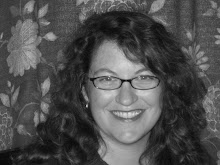
The Habitual Poet: Martha Silano

Installment #10

: : :

The Habitual Poet is an ongoing series of contributor interviews. If you are a Poemeleon contributor and would like to participate copy & paste the Q's from below and e-mail your answers to: editor@poemeleon.org.


: : :


Reading


Q: Where do you prefer to get your books?


Used bookstores and local bookstores.


Q: How many poetry books do you think you own, and what percentage of these have you actually read?


100 or more; I’ve read all or part of most of them.


Q: When, where and how do you usually read? (i.e. at bedtime under the covers, cover to cover, etc.)


When: all times of the day/night; where: In bed, at the playground, at the kitchen table, on the couch; how: sometimes front to back, sometimes based on the title (scan the t of c and read the ones that sound good).


Q: What books of poetry have you read this month?


July is a bad month to ask. I don’t read much poetry during summer vacation. During the school year I am always reading poetry—mostly from lit magazines, but also books.


Q: What other books/magazines/backs of cereal boxes have you read recently?


I am reading Plenty: One Man, One Woman, and a Raucous Year of Eating Locally. Before that I read The Ethics of What We Eat: Why Our Food Choices Matter. I read the NY Times whenever I can get my hands on it. When I’m home I also read The New Yorker, and bits and pieces of Harper’s and The Atlantic Monthly. I love reading short stories. While I was reading the above, I also was reading Charles Baxter’s Into the Safety Net.


: : :


Writing


Q: When, where, how do you write, and why?(i.e. at dusk on a dock, longhand in a notebook, because...)


When: whenever I have a free moment; Where: no requirements (in Kinko’s waiting for my passport photos to be processed, sitting on the curb waiting for my son’s bus to pull up, at the zoo, etc.) Why: I have no choice in the matter.


Q: How many first drafts do you think you complete in a week? A month?


It depends. This past winter spring I was writing about four new drafts a month. In the last month I’ve begun ONE poem (hey, it’s summer!).


Q: How long do you wait before revising a poem?


Again, it depends. Sometimes I set right in on revising. Other poems I have to let sit for at least a month before it becomes apparent what needs to be added, deleted, clarified, etc.


Q: When do you know a poem is “done”?


HA! Does anyone ever know? I keep revising until there are no parts that bug me—when all the line breaks create some sort of suspense, when the ending is working, when I’ve cut away all the extraneous, when I read the poem aloud and don’t cringe or stumble.


Q: Have you ever given up an invitation so you could stay home and write?


Yes, indeed. Confession: I used to unplug my phone even when I’d made tentative plans to go out with someone.


: : :


Publishing:

Q: What is your system for sending out work?


I send to magazines I would be proud to be in. I have a list of favorites, places where they publish poetry that I like and relate to, and I send to those frequently, plus I’ll often step out of my comfort zone and submit to places I’m not sure I belong in. My system? I keep track by making photocopies of dated cover letters and keeping them in a “pending acceptances” file (I have another file for rejections).


Q: What have you more recently received: a rejection notice or an acceptance? Was it what you expected?


Recently it’s been more rejection than acceptance—a string of rejections, in fact. But just before that I received three acceptances, one each for three days. On the fourth day I was a little let down (!).


Q: Where do you generally publish: online, in print, or a mix, and do you have a preference?


I have published more in print than online, but I am generally fine with online if I like the graphics/layout and it’s a magazine I respect.


Q: What is the worst (or weirdest, or best) experience you’ve had with a journal/magazine/press & its editor(s)? (No names, please!)


My favorite story has to do with an editor rejecting a revised version of a poem he’d initially accepted, and then that poem going on to be pubbed in a fine magazine, featured on Poetry Daily and anthologized in two books.


Q: Have you ever received any fan (or hate) mail? If so, what was that like?

No, no hate mail yet. Fan mail: yes. The best fan mail I ever received came from an admirer whom I started emailing with. Fast forward six years: she is my most trusted reader, and a dear friend to boot.


: : :


Practical considerations:

Q: What is your day job, and how does it affect your writing?


I teach English full-time at Bellevue College, near my home in Seattle, Washington. My job, while time consuming, allows me to write throughout the school year. The flexibility of teaching both grounded and online courses allows me to go on short (3-day) writing retreats 3-4 times a year. The contact with students and faculty gets my creative juices flowing. I am not a write-from-the-ivory-tower sort of gal. I need a balance of social time and isolation. I do not think I would be any more productive if I stopped teaching and found a part time job.


Q: How does your significant other’s occupation affect your writing life?


My significant other is also a writer (mostly creative non-fiction); in other words, we understand each other—what it means to be blocked, insecure, working on a revision, etc. This understanding positively affects my writing; so does the fact that he’s a superb editor.

Q: Have there been periods in your life when you couldn't write?


When I first stated writing, I would often get blocked after I wrote a line or two. Endings have always been difficult for me, but in this case I didn’t even get to the middle. This was before I figured out that the first draft is supposed to be terrible.


Q: Do you have a “poetry budget”?


Not sure what you mean by this. Do you mean I budget how much I am allowed to write poetry? No, I don’t.


Q: Have you ever suffered (or made someone else suffer) in the name of your art? (i.e. picked up your kids late from school

so you could finish a poem, forgone lunch to buy a book, left a relationship because the other person just didn't understand, etc.)

I left a long-term boyfriend because he, among other things, was not a writer; I often keep my daughter in preschool till the last second so I can draft a poem in the car outside her school before walking in and picking her up. Sometimes I would rather write than parent, so my husband takes the kids to the movies, the park, etc. But they need and like time with their dad, so I don’t think this is suffering, exactly.


: : :


Random nonsense:

Q: Do you have any superhuman abilities? (i.e. can you tie a cherry stem in a knot with your tongue, or write a double sestina with both hands tied behind your back?)


Nothing superhuman, although I have been known to work on poems while driving a car.


Q: You write a scathing poem about your mother and she learns about it. You:

a.) Move to South America and leave no forwarding address
b.) Delete the poem and insist it never existed
c.) Show it to her (she’s already written you out of the will anyway)
d.) Do none of the above; instead you: _____


Apologize and tell her it was written in the name of art, that I stretched the truth in service of the poem, that it’s not really about her.


Q: If the best medical specialists in the world told you that if you didn’t give up your poetry habit today you would die in six months, would you get your affairs in order or would you leave that up to your family?


I would die if I didn’t give up poetry? I would give up poetry.

Q: If you could be a vowel, which one would you be and why?


This is hard. I like all the vowels, but I think I would like to be A best: alphabet, apple, apricot, April, ancient, ancestor, abracadabra . . .


Q: Finally write a couplet for a collaborative ghazal using the following kaafiyaa and radif: “said the poet”.


Sorry, but I don’t do ghazals on vacation.


_______________________________________________________


Martha Silano is the author of two book-length poetry collections, Blue Positive (Steel Toe Books 2006) and What the Truth Tastes Like (Nightshade Press 1999). Her poems have appeared in such places as Paris Review, Green Mountains Review, TriQuarterly, and Beloit Poetry Journal; new work is forthcoming in 32 Poems, AGNI, Crab Orchard Review, and Prairie Schooner. Martha is the recipient of grants from Washington State Artist Trust and the Seattle Arts Commission, and she’s been a writing fellow at the University of Arizona Poetry Center, the Millay Colony for the Arts, and the Whiteley Center, among others. Her work has been anthologized in over a dozen collections, including Not for Mother’s Only (Fence Books 2007) and American Poetry: the Next Generation (Carnegie Mellon University Press 2000). Martha teaches at Bellevue College, near Seattle, WA, where she lives with her two children and her forager/essayist husband, Langdon Cook.

The Habitual Poet: Janice D. Soderling

Installment #9

: : :

The Habitual Poet is an ongoing series of contributor interviews. If you are a Poemeleon contributor and would like to participate copy & paste the Q's from below and e-mail your answers to: editor@poemeleon.org.


: : :


Reading


Q: Where do you prefer to get your books?


I prefer to buy them from independent bookshops, and always end up with an armload when I am in a city. But I live in the outer boondocks and truth to tell, my buying of both new and used books is mostly via the internet.


Q: How many poetry books do you think you own, and what percentage of these have you actually read?


A quick look at my book shelves says way over a thousand, but I have been buying them for more years than you are old. And most poetry books, unless they are collected works or selected works, are not very fat. I have read most of them. I read and re-read daily.


Q: When, where and how do you usually read? (i.e. at bedtime under the covers, cover to cover, etc.)


Actually I read off and on throughout the day every day. I usually take a book of poetry to the breakfast table. It gets me going.


Q: What books of poetry have you read this month?


The little stack of books where I eat breakfast yielded the following: The Collected Poems of John Donne, Look We Have Coming to Dover (Daljit Nagra), Native Guard (Natasha Trethewey), Archaic Smile (A.E.Stallings), Jazz Funeral (Julie Kane), The Poem and the Journey: 60 Poems for the Journey of Life (ed. Ruth Padel), Collected Poems by Eugenio Montale (translator Jonathan Galassi), Beyond the Walls; Selected Poems (Nazim Hikmet), Lucky Life (Gerald Stern), Sixty Women Poets (ed. Linda France) First World War Poems (ed. Andrew Motion), Selected Poems (Wislawa Szymborska in Swedish translation by Anders BodegÄrd), Double (John Hartley Williams), French Symbolist Poetry (translators Houston & Houston). There are more but that will do.


Q: What other books/magazines/backs of cereal boxes have you read recently?


Today I got stuck in The Paris Review as soon as it arrived, because of a wonderful story by Damon Galgut. During the past week or ten days I've read (though not cover to cover in every instance) Poetry (August issue), the New Yorker and Atlantic Monthly, Glimmer Train Stories. I am currently reading "The Classical World" by Robin Lane Fox and a book in Swedish about the history of Finland.


: : :


Writing


Q: When, where, how do you write, and why?(i.e. at dusk on a dock, longhand in a notebook, because...)


Every day. In my office. If you write for a living, you just don't say to a client, "I will write your text as soon as I feel inspired." Believe me, there is a faucet inside everyone and you can learn how to turn it on. You say to the Muse, "Get your butt in here, NOW, and help me write this or my children will starve."

I write 99 % on the computer. I am almost in retirement mode, so nowadays I write mostly for pleasure. Sometimes for only a few hours (poems), sometimes for hours on end (fiction). When I was young and an employee and a solo mom I wrote while waiting for the bus, on my lunch hour, while stirring the gravy. Why? Because I cannot help it.


Q: How many first drafts do you think you complete in a week? A month?


I try to write a poem a day. It isn't always brilliant, but usually (ha, ha). If I am working on fiction, I work non-stop, nap a little and start again as soon as I wake up. I am the prototype for the unwashed and starving writer when I get into these stretches. I really don't know where the borderline is between first draft and succeeding drafts. I just keep at it until it is done.


Q: How long do you wait before revising a poem?


Usually I revise until it is finished. I double check the following day.


Q: When do you know a poem is “done”?


You just know it. Sometimes you know it several times.


Q: Have you ever given up an invitation so you could stay home and write?


Not that I recall. I know how to turn on the faucet, remember? But I have often lost track of time and missed doing things I was supposed to do.


: : :


Publishing:

Q: What is your system for sending out work?


I keep a cross-index of my submissions by titles and by sites/journals as well as a little book where I enter submissions in chronological order.


Q: What have you more recently received: a rejection notice or an acceptance? Was it what you expected?


My little book shows that this month, of which three weeks have passed, I have made 14 submissions. I've had one 1-day acceptance and one 1-day rejection. I have also had two acceptances and some rejections from earlier submissions.


Q: Where do you generally publish: online, in print, or a mix, and do you have a preference?


Both. Actually I love seeing my stuff on paper, I really, really do. But because I live in a non-English-speaking country, online is the most convenient way to submit and that usually means online publishing also.


Q: What is the worst (or weirdest, or best) experience you’ve had with a journal/magazine/press & its editor(s)? (No names, please!)


The best experiences have got to be when I was a young know-nothing (even dumber than now) and some wonderful editors took the time to jot down a few encouraging lines on the rejection slip. Also today I bow to the excellent editors who suggest a change to make a piece publishable. I hope God gives them a room with a nice view in Editor Heaven.


Q: Have you ever received any fan (or hate) mail? If so, what was that like?

Not for my work in English, but when I was writing in Swedish I got a few letters from strangers saying that they liked my work and did I have any book published? I didn't.


: : :


Practical considerations:

Q: What is your day job, and how does it affect your writing?


My day job has always been commercial writing/translating. I learned to write on demand.


Q: How does your significant other’s occupation affect your writing life?


I don't have an S.O.


Q: Have there been periods in your life when you couldn't write?


No.


Q: Do you have a “poetry budget”?


What is a budget? Is that when you have more money than days on the 25th of each month?


Q: Have you ever suffered (or made someone else suffer) in the name of your art? (i.e. picked up your kids late from school so you could finish a poem, forgone lunch to buy a book, left a relationship because the other person just didn't understand, etc.)

I have skipped many lunches to buy books in younger days.


: : :


Random nonsense:

Q: Do you have any superhuman abilities? (i.e. can you tie a cherry stem in a knot with your tongue, or write a double sestina with both hands tied behind your back?)


Oh yes. Dictionaries automatically open themselves for me at exactly the word I am looking for.


Q: You write a scathing poem about your mother and she learns about it. You:

a.) Move to South America and leave no forwarding address
b.) Delete the poem and insist it never existed
c.) Show it to her (she’s already written you out of the will anyway)
d.) Do none of the above; instead you: _____


Oh, I would develop it into a story, what have I got to lose?


Q: If the best medical specialists in the world told you that if you didn’t give up your poetry habit today you would die in six months, would you get your affairs in order or would you leave that up to your family?


Oh, man, I have been trying to get my affairs in order for years.


Q: If you could be a vowel, which one would you be and why?


I think "O" would personify the real me. I have spent most of my life saying "Oh".


Q: Finally write a couplet for a collaborative ghazal using the following kaafiyaa and radif: “said the poet”.


Come, let us reconstruct our broken past, resurrect its road kills.
Though we die daily, we can write ourselves alive, said the poet.


_______________________________________________________


Janice D. Soderling is an award-winning writer and translator whose credits include Acumen, the Beloit Poetry Journal, Event, Fiddlehead, Glimmer Train, Malahat Review, Other Poetry and Tipton Poetry Journal. Her work is represented in anthologies and can be read online at 42opus, Our Stories, Babel Fruit, The Chimaera, Innisfree Poetry Journal, Lucid Rhythms, Loch Raven Review, Right Hand Pointing and Umbrella. Forthcoming work at Anon, Blue Unicorn, Centrifugal Eye, Literary Mama, and Mezzo Cammin. Janice was born in the United States, but lives in Sweden.


The Habitual Poet: Lucia Galloway

Installment #8

: : :

The Habitual Poet is an ongoing series of contributor interviews. If you are a Poemeleon contributor and would like to participate copy & paste the Q's from below and e-mail your answers to: editor@poemeleon.org.


: : :


Reading


Q: Where do you prefer to get your books?


I have a number of sources: readings and book signings; used bookstores (good for finding single-volume editions of well-known poets’ early work); Amazon. I also like to patronize indie bookstores as a way to keep the literary culture of our country vibrant and healthy.


Q: How many poetry books do you think you own, and what percentage of these have you actually read?


I own around 250 books of poetry. I’ve probably read about 60% of them cover to cover. The other 10% I may have started and abandoned, or simply not read at all.


Q: When, where and how do you usually read?(i.e. at bedtime under the covers, cover to cover, etc.)


First thing in the morning while enjoying my first cup of coffee in my quiet study (for poetry); the Honnold Library at the Claremont Colleges is a good spot for serious reading (including poetry). Otherwise, coffee shops, airplanes, waiting rooms, under the dryer at the hairdresser’s.


Q: What books of poetry have you read this month?


Stanley Plumly’s late 70s volume, Out-of-the-Body Travel, (Ecco Press), and Carl Dennis' Unknown Friends (Penguin 2007).


Q: What other books/magazines/backs of cereal boxes have you read recently?


Fanny Howe’s, The Winter Sun; Kate Atkinson’s When will there be Good News; Vanina Marsot’s Foreign Tongue; Tom Drury's The End of Vandalism, Marilynne Robinson's Housekeeping; also Harper’s, The Sun; Poetry Magazine; Crazy Horse, Prairie Schooner.

: : :


Writing


Q: When, where, how do you write, and why?(i.e. at dusk on a dock, longhand in a notebook, because...)


When the internal pressure gets high enough and I can find external quiet. Either I compose at the computer, or I write with a blue ballpoint pen on the back of used computer paper that I’ve folded in half. Why do I write? Out of a twofold desire: to document the circumstances, desires, and complexities of life as I know it; and to test the limits of language to express tones and colors inherent in human experience that had not been able, hertofore, to be expressed.


Q: How many first drafts do you think you complete in a week? A month?


It all depends . . . on lots of things. During the month of April, I drafted a poem a day. Most months I write drafts of 2-3 new poems.


Q: How long do you wait before revising a poem?


I start revising almost immediately, then I wait several hours and do another round; then I wait several days or weeks or months and go at it again. Actually, most of my writing hours are given over to the revising process.


Q: When do you know a poem is “done”?


I never KNOW that it’s done. But most poems I consider done once they’ve been published or have won a prize or been read at someone’s wedding . . .


Q: Have you ever given up an invitation so you could stay home and write?


I doubt it. Occasionally, I rearranged a lunch date to accommodate my writing time.


: : :


Publishing:


Q: What is your system for sending out work?


What system? Seriously, I use an old-fashioned card file to keep track of submissions; and I file submission letters, acceptances, and rejections in an old-fashioned 3-ring notebook. Those are the mechanics of it. The decisions about where to submit are subject to whimsy and serendipity. I do keep a short-list of journals here I’d like to publish and try to submit to them whenever I have something that seems suitable.


Q: What have you more recently received: a rejection notice or an acceptance? Was it what you expected?


Rejections are never “expected”; but then, neither are acceptances. Hope springs eternal, and all that.


Q: Where do you generally publish: online, in print, or a mix, and do you have a preference?

Both in print and on-line. Each has its advantages. I like the on-line potential to reach a large audience, and I like the heft of a print journal in my hands and its presence on my shelf.


Q: What is the worst (or weirdest, or best) experience you’ve had with a journal/magazine/press & its editor(s)? (No names, please!)


The most gratifying experience I’ve had with a journal editor is having all 3 of the poems I submitted accepted and published in the same issue. One of these was subsequently nominated for the Pushcart.


Q: Have you ever received any fan (or hate) mail? If so, what was that like?


Fan mail only from friends, but even that felt good.


: : :


Practical considerations:


Q: What is your day job, and how does it affect your writing?


Until recently, I worked as an on-line writing instructor for Johns Hopkins CTYOnline, a program for gifted and talented youth. This is a job I might resume if and when the national economy revives enough to make the demand for these courses healthier. It was a good, part-time job and kept me thinking about writing: using strong verbs, vivid images, figurative language, etc.


Q: How does your significant other’s occupation affect your writing life?


My husband has recently retired from a long career as a physicist at Caltech-JPL doing research and development. His “occupation” as a retiree is somewhat less-well defined, a situation that has challenged me in managing my writing time.


Q: Have there been periods in your life when you couldn't write?


Since I started writing seriously about 15 years ago, I’ve had some relatively brief dry periods. For instance, I simply cannot write while entertaining house guests or relatives in my home. Also, it’s hard to write during illness or high-stress periods. When all else fails, I write in my journal anything that comes to me.


Q: Do you have a “poetry budget”?


No, but I’ve been fortunate to have enough discretionary income to support my poetry habit.

Some of the funds for attending writing conferences and the travel they entail comes from the joint budget of my husband and me.


Q: Have you ever suffered (or made someone else suffer) in the name of your art? (i.e. picked up your kids late from school so you could finish a poem, forgone lunch to buy a book, left a relationship because the other person just didn't understand, etc.)


This question would require such a nuanced answer that it would inflict suffering upon the reader of this survey. Aside from my in-laws, I don’t think I’ve inflicted much suffering on anyone in the name of my art. One person was embarrassed, I think, to have been featured in a poem of mine. Otherwise, well, I’ve made my husband wait for supper a few times.


: : :


Random nonsense:


Q: Do you have any superhuman abilities? (i.e. can you tie a cherry stem in a knot with your tongue, or write a double sestina with both hands tied behind your back?)


As far as I know, I’m all too human.


Q: You write a scathing poem about your mother and she learns about it. You:

a.) Move to South America and leave no forwarding address
b.) Delete the poem and insist it never existed
c.) Show it to her (she’s already written you out of the will anyway)
d.) Do none of the above; instead you


Hope she doesn’t turn over in her grave. [Forgive the irreverence, Mom, wherever you are.]


Q: If the best medical specialists in the world told you that if you didn’t give up your poetry habit today you would die in six months, would you get your affairs in order or would you leave that up to your family?


I don’t know.


Q: If you could be a vowel, which one would you be and why?


This is a hard question because each vowel has several sounds, depending on its context. Also, the vowels as sung are different from the same vowels as spoken. Then there’s the look of a vowel on the page. Although the letters a and o are more comely than u, i, or even e; nevertheless, I like using the i-vowel in poems—capital, lower-case, short or long. I like the softness of short-i and the strengh of long-i (which is actually a diphthong: pronounced ahhh-ee).


Q: Finally write a couplet for a collaborative ghazal using the following kaafiyaa and radif: “said the poet”.


A diligent minuet is the dance you covet?

Trade your Brahms for Luly, said the poet.


_______________________________________________________


Lucia Galloway is the author of Venus and Other Losses, forthcoming from Plain View Press in the Fall of 2009. A chapbook, Playing Outside, was published by Finishing Line Press in 2005. Galloway’s work has appeared widely in print and on-line magazines: Columbia Poetry Review, Cumberland Poetry Review, Flyway, Gertrude, The Lyric, The MacGuffin, Poetry Midwest, Poemeleon, Prism Review, Redheaded Stepchild, Sierra Nevada CollegeReview, Spillway, Thema, and Verdad, among others. Nominated for the Pushcart, her poem “For a Woman Washing Vases” also took a first-place award in the 2005 Artists Embassy International Dancing Poetry Festival. Galloway is the recipient of the Robert Haiduke Prize from the Bread Loaf School of English and Honorable Mention in The MacGuffin National Poet Hunt. She holds the MFA in Creative Writing from Antioch University, Los Angeles, and has taught writing to academically gifted students in the Johns Hopkins program CTYOnline. Galloway co-hosts the monthly Poetry Reading Series of the Claremont Public Library. Contact information and samples of her work are available at www.luciagalloway.com.